Home/Publications/Youth Skills and Jobs Barometer
Annual outlook · Youth and jobs · First edition, 2026
Youth Skills and Jobs Barometer
The first edition of Tsavone Consulting's annual barometer of youth skills and jobs in Uganda. It brings together the 2024 Census, the UBOS Labour Market Survey 2025, the National Human Resource Survey and other recent official data on young people's work, unemployment, NEET status, informality, skills, digital access and migration. Every figure is sourced, gaps are named, and a scorecard and measurement agenda set the baseline for later editions.
Key findings
What the evidence says.
Half of young adults are not in employment, education or training.
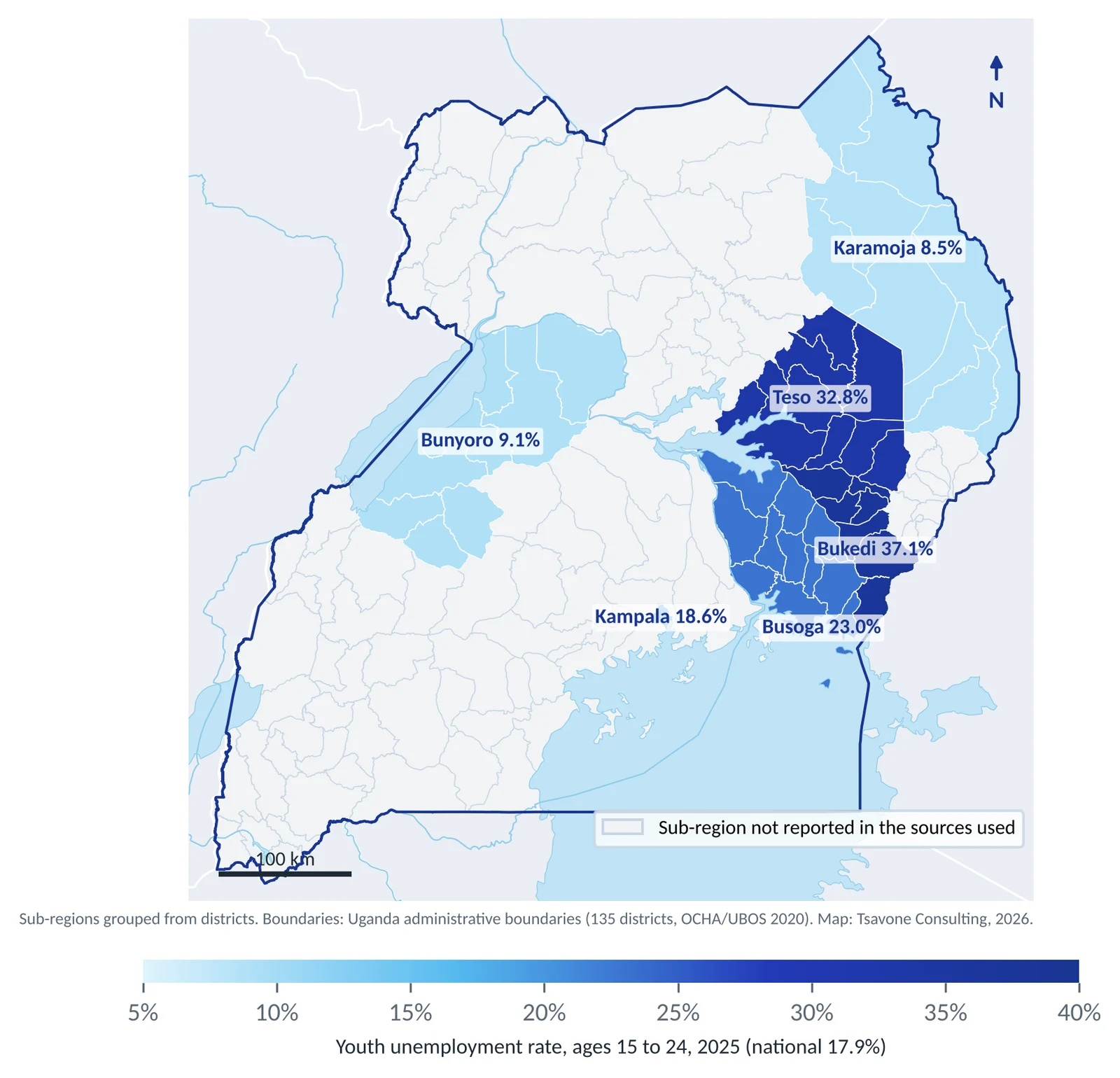
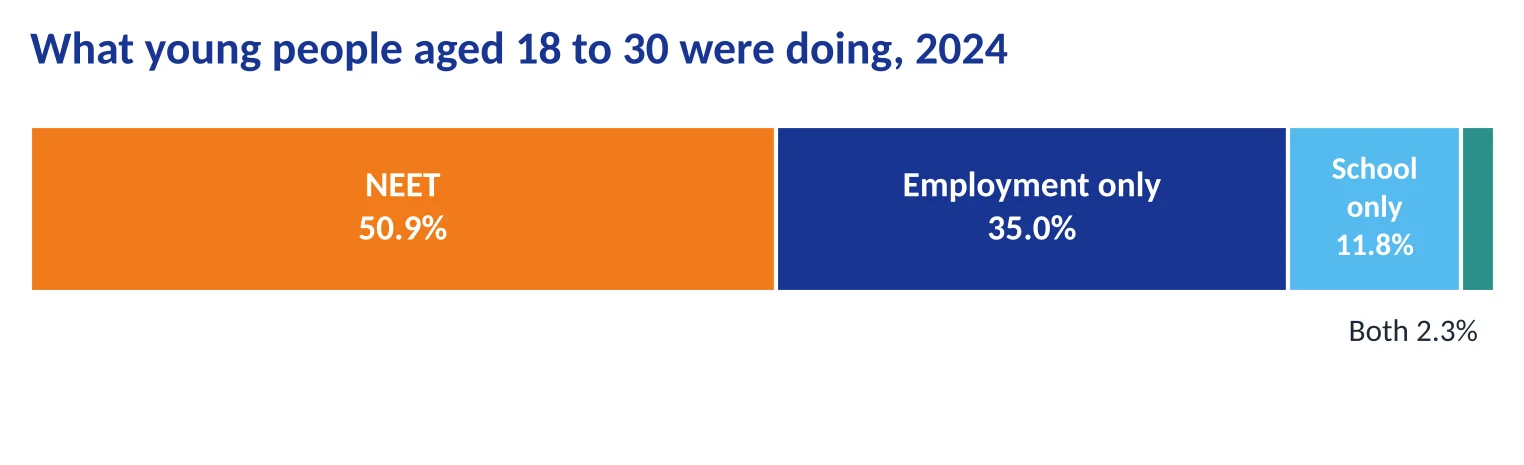
The 2024 Census found that 50.9 per cent of youth aged 18 to 30 were NEET, rising to 54.8 per cent in rural areas and ranging from 34.1 per cent in Kampala to 62.4 per cent in Bukedi.
Youth unemployment is high and higher for young women.
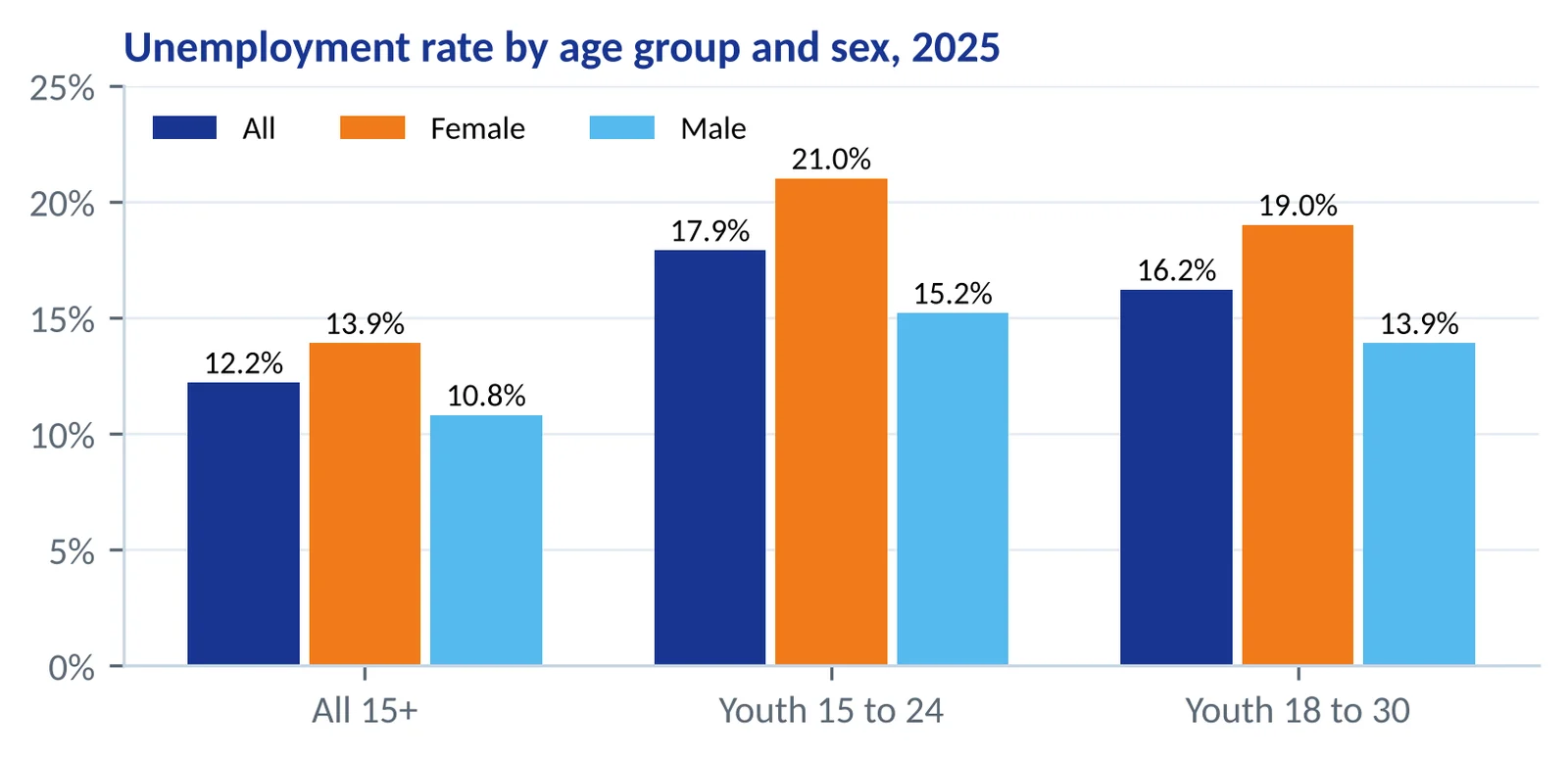
The UBOS Labour Market Survey 2025 found unemployment of 17.9 per cent among those aged 15 to 24 (young women 21.0 per cent, young men 15.2 per cent), against 12.2 per cent for all people aged 15 and over.
Long-term unemployment is the norm for jobless youth.
In the 2024 Census, 48.8 per cent of unemployed youth aged 18 to 30 had been looking for work or trying to start a business for more than a year.
Work is overwhelmingly informal.
Outside agriculture, 95.1 per cent of employed people aged 15 to 24 and 91.5 per cent of those aged 18 to 30 are in informal employment.
More education does not yet mean more jobs.
Unemployment among youth aged 15 to 24 with post-primary specialised training or more is 28.2 per cent, and 36.3 per cent for young women in that group.
Formal employers are hiring, but slowly.
Formal establishments employed about 2.37 million people and reported 155,240 vacancies in 2025; informal establishments reported 305,364 vacancies.
Education output is rising fast.
UCE registrations reached 432,163 in 2025, up 20.2 per cent from 2024.
TVET is being rebuilt.
The Technical and Vocational Education and Training Act, 2025 came into force on 15 March 2025, created a Skills Development Fund and set a skills development levy of 1 per cent of gross emoluments for employers with five or more employees.
Maps and charts
Selected figures from the outlook.
For decision-makers
What decision-makers should do.
- Target NEET youth, not only the unemployed. Most young people outside work are not counted as unemployed. Programmes should reach those in Bukedi, Teso and rural areas where NEET rates are highest.
- Design for young women. Young women face higher unemployment at every education level reported. Programmes need childcare, safety and sector choices that work for them.
- Fix the transition from training to work. Link the new TVET system and the skills levy to employer demand, work placements and tracer studies.
- Measure what programmes achieve. Large public programmes reach few youth according to the 2024 Census. Rigorous evaluation should guide where the next shilling goes.
- Make labour migration safer and more skilled. Train and certify migrant workers for better-paid roles abroad and protect them from abuse.
Inside the full outlook
26 pages of sourced evidence.
Every figure is traced to a public source listed in the outlook. Download it free, share it, and cite it.
- About this barometer
- Executive summary
- Why a youth skills and jobs barometer
- The barometer at a glance
- Demography: a large and growing cohort
- Work: employment, unemployment and underuse
- NEET: the young people programmes often miss
- Job quality and the demand for labour
- Skills: education, training and the match with work
- Access: digital, finance and public programmes
- Mobility: labour migration and the wish to leave
- Youth voice
- Barometer scorecard (Tsavone judgement)
- Outlook: 2027 and beyond
- Implications for decision-makers
- What Tsavone will measure in later editions
- Methods note
How to cite: Tsavone Consulting (2026). Youth Skills and Jobs Barometer. First edition, 2026. Publication TSV-PUB-009. Kampala, Uganda: Tsavone Consulting. Lead author: Patrick Engoru. Available at: www.tsavone.com/publications