Offices in Kampala and Gulu City · Working across Uganda, Africa and beyond

Home/Services/Field evidence

Specialist service · Field evidence

Baseline surveys you can build on.

Baselines set your targets and endlines decide whether your programme worked. We design and run baseline, midline and endline studies and household surveys anywhere in Uganda, with data that holds up when funders and evaluators look closely.

The challenge

Weak baselines make every later result harder to prove.

A baseline that misses the people the programme serves, uses a badly translated questionnaire or cannot be repeated at endline leaves you with numbers no one fully trusts. Targets get set on shaky ground, and at endline it becomes difficult to show what changed and why. Many teams only find these problems when the evaluator or funder starts asking questions.

Uganda adds its own challenges: many languages, scattered and mobile households, refugee and host populations, seasonal access and strict rules on consent and personal data. Getting a representative sample, a questionnaire that means the same thing in Luganda, Acholi or Ateso as in English, and interviews that really took place needs experienced field teams and firm quality controls.

What we deliver

Evidence and outputs you can use.

  • Baseline, midline and endline studies, designed so results can be compared over time
  • Household, enterprise, facility and institutional surveys
  • Sampling designs that cover the sub-groups your reporting needs, such as women, youth and refugees
  • Questionnaires translated, back-translated and piloted before fieldwork
  • Digital data collection with ODK, KoboToolbox or SurveyCTO
  • Focus group discussions and key informant interviews alongside surveys
  • Clean datasets, documented analysis and reports that link back to your indicators
  • Values for your results framework and targets you can defend

How we work

A clear path from question to evidence.

  1. Agree the inception

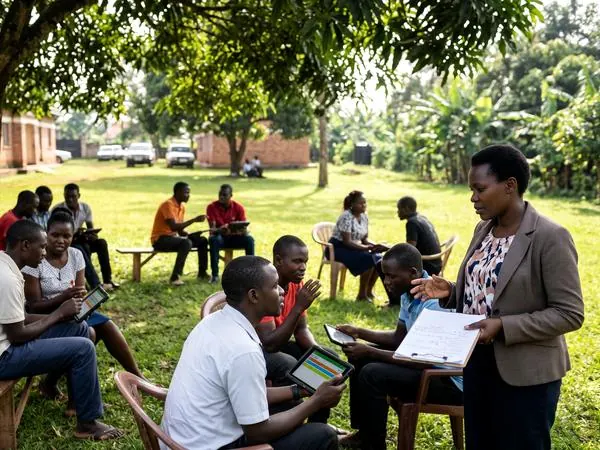
    Methods, sample, tools and deadlines are agreed with you in an inception report before fieldwork begins.

  2. Prepare tools and teams

    Questionnaires are translated and piloted, and enumerators are trained and tested before they go to the field.

  3. Collect with daily checks

    Data quality is reviewed every day during fieldwork, with a share of interviews checked again by a separate team.

  4. Analyse and report

    Cleaning and analysis are documented so every number can be traced from raw data to the report.

  5. Set up the next round

    We leave tools and records that make the midline or endline directly comparable.

Why Tsavone

What you can count on.

Field data is our core

Collecting data that holds up to scrutiny is our signature capability, not a side service.

Checks built in as standard

Piloted tools, tested enumerators, GPS and time stamps, back-checks and daily data reviews come with every survey.

National reach

From offices in Kampala and Gulu City, with associates and partner firms, we work across Uganda in local languages.

Independent quality review

A senior reviewer outside the delivery team checks every assignment before it reaches you.

Relevant experience

Work our team has led.

Experience of our team

National evaluation of agricultural market information services

Our team led a DANIDA-funded national evaluation that combined provider and user surveys and informed the redesign of national market information services.

See all case studies

Experience of our team

Producer-group research programme start-up

Our team set up and ran a USAID-funded field research operation, with recruitment and supervision of field staff and data-quality processes.

See all case studies

Common questions

Questions buyers ask us.

How long does a baseline survey take?

It depends on the sample size, the number of districts, the languages involved and any ethics or permit requirements. A typical household baseline runs from inception through tool testing, fieldwork, analysis and reporting over several weeks to a few months. Send us your terms of reference and we will propose a realistic timeline.

What is the difference between a baseline, midline and endline?

A baseline measures conditions before or at the start of a programme and sets the values targets are measured against. A midline checks progress partway through, and an endline measures the situation at the end. They work best when the sample, questions and methods stay comparable across all rounds.

How big should my sample be?

That depends on the changes you want to detect and the sub-groups you need to report on separately, such as women, young people or refugees. Clustered samples, for example by village, need more respondents than simple random ones. We set out the sample and its reasoning in the inception report for your agreement.

Do you work in local languages?

Yes. Questionnaires are translated, checked by back-translation and piloted with real respondents, and enumerators interview in the languages respondents use. This matters because a question that works in English can mean something different in another language.

Will we receive the raw data?

Yes, subject to the consent given and Uganda's Data Protection and Privacy Act, 2019. You receive the cleaned dataset, documented cleaning and analysis files, and field quality reports, so the results can be checked and repeated.

Request a proposal

Planning a baseline? Bring us in early.

Share your terms of reference, results framework or draft indicators. We will reply with how we would approach the study, the team and a timeline. Fees are on request.

We reply within two working days. You can also email info@tsavone.com or call +256704579186.

Ground Truth, in your inbox.

Short, sourced briefs and new outlooks on what is changing in the field. About once a month.

By subscribing you agree to receive Ground Truth by email, as set out in our privacy notice. Unsubscribe at any time.

Chat with us on WhatsApp